Research Spotlight: Cris Avitia Camacho
Highlighting CCAS Research: We recently asked our undergraduate student, Cris Avitia Camacho, about their experience presenting at Yale University. We take a moment to congratulate Cris as they embark on their research journey!
1) Can you tell us a little bit about yourself?
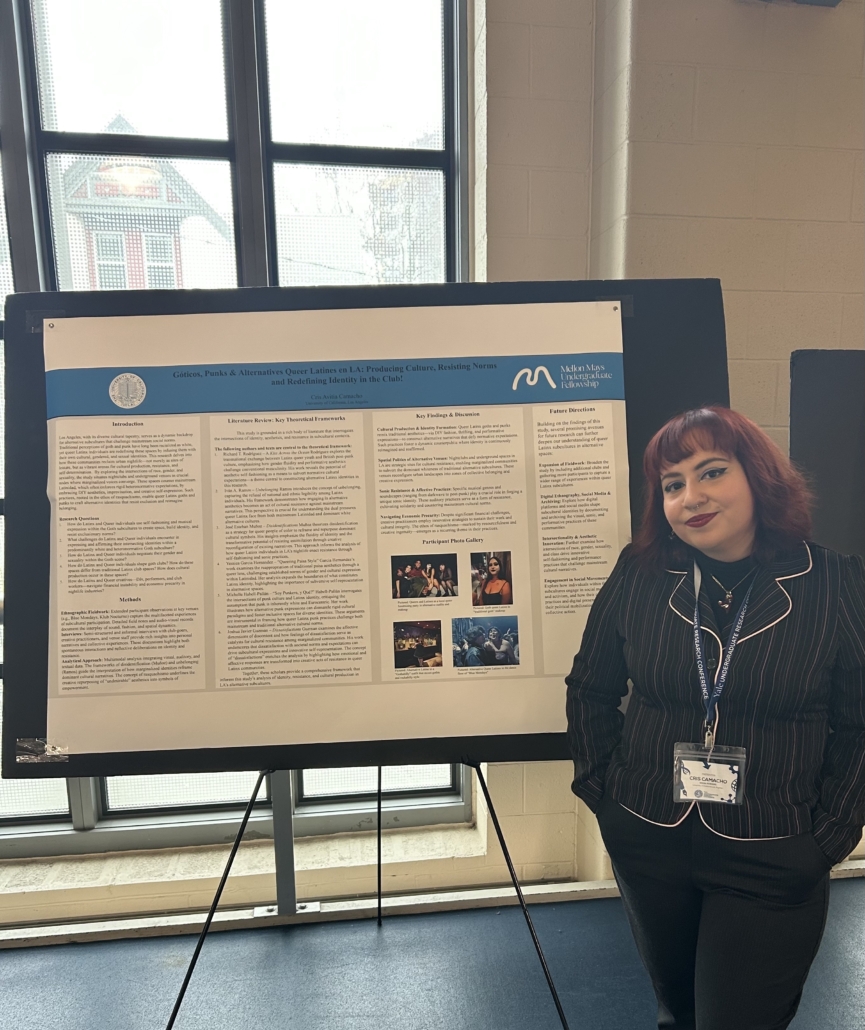
My name is Cris Avitia Camacho (they/them) and I’m a 3rd year Chicanx Studies, Labor Studies, and Gender studies triple major with a minor in LGBTQ Studies. I have previously participated in the Undergraduate Research Fellows, the Summer Research Fellowship, and am currently a Mellon Mays Fellow with the intention of pursuing a Ph.D. after graduation. My current research project is “Góticos, Punks & Alternativos en Los Ángeles: Latines & Queers Producing Culture, Resisting Norms and Redefining Identity in the Club!” explores how Latine and Queer individuals in LA’s goth, punk, and alternative nightlife scenes navigate and transform subcultural spaces. Through ethnographic fieldwork, interviews, and cultural analysis, my research shows how nightclubs become powerful spaces of queer world-making—where community is built, identities are expressed, and racial and gendered norms are actively challenged, even amid gentrification, exclusion, and economic precarity.
2) What are your research interests and how did you initially get interested in them?
My research interests include labor movements and issues, alternative subcultures, self-fashioning, cultural production, Latinx and Queer experiences, gender and sexuality, and identity within marginalized communities. As a Queer Mexican immigrant, my lived experiences shape my interests, and through focused research and creative inquiry, I’ve been able to explore and expand upon them. Growing up, I was introduced to rock en español by my father, an early exposure that sparked my passion for alternative music and subcultural expressions. In college, my invitation to the alternative club Blue Mondays further immersed me in these alternative scenes, solidifying my commitment to exploring how Queers & Latines navigate and reshape spaces marked by exclusion.
3) How was your experience presenting your research at Yale?
My experience presenting my research at Yale reaffirmed my belief that getting an education at UCLA is extremely socioculturally meaningful. Surrounded by the diverse communities of Los Ángeles, UCLA has allowed me to engage with the community and become a community activist and journalist. Therefore, arriving at Yale felt like a culture shock due to the white-centered and at times elitist attitudes by the students. Despite this, I remained grounded and proud of my background, and the meaningful work I have accomplished. I was able to engage with passionate scholars making active change in their communities, and gained access to a wide variety of scholarly networks. I was able to participate in a poster competition, and although the judge in my section did not understand and see the full potential of my “unconventional” research, I know that other scholars out there are passionate about the issues I am addressing through my research. As an aspiring college professor and mentor, I want to make a positive change in the field of academia by producing research about the communities I form a part of and making it accessible to them. I recognize the value of my research, and I remain determined to continue breaking barriers and norms regarding “conventional” research. After this experience, I remain grounded and thankful for the opportunity to share my research with a wider community, and positive that I can contribute to change in the way people like me are treated in academia. Additionally, I would like to share that Maricruz Huerta (McNair Scholar!) and I are starting an organization at UCLA to expose students to research and support students through their research journey called “We Belong Research Collective” and we would love to invite anyone interested in getting involved.